
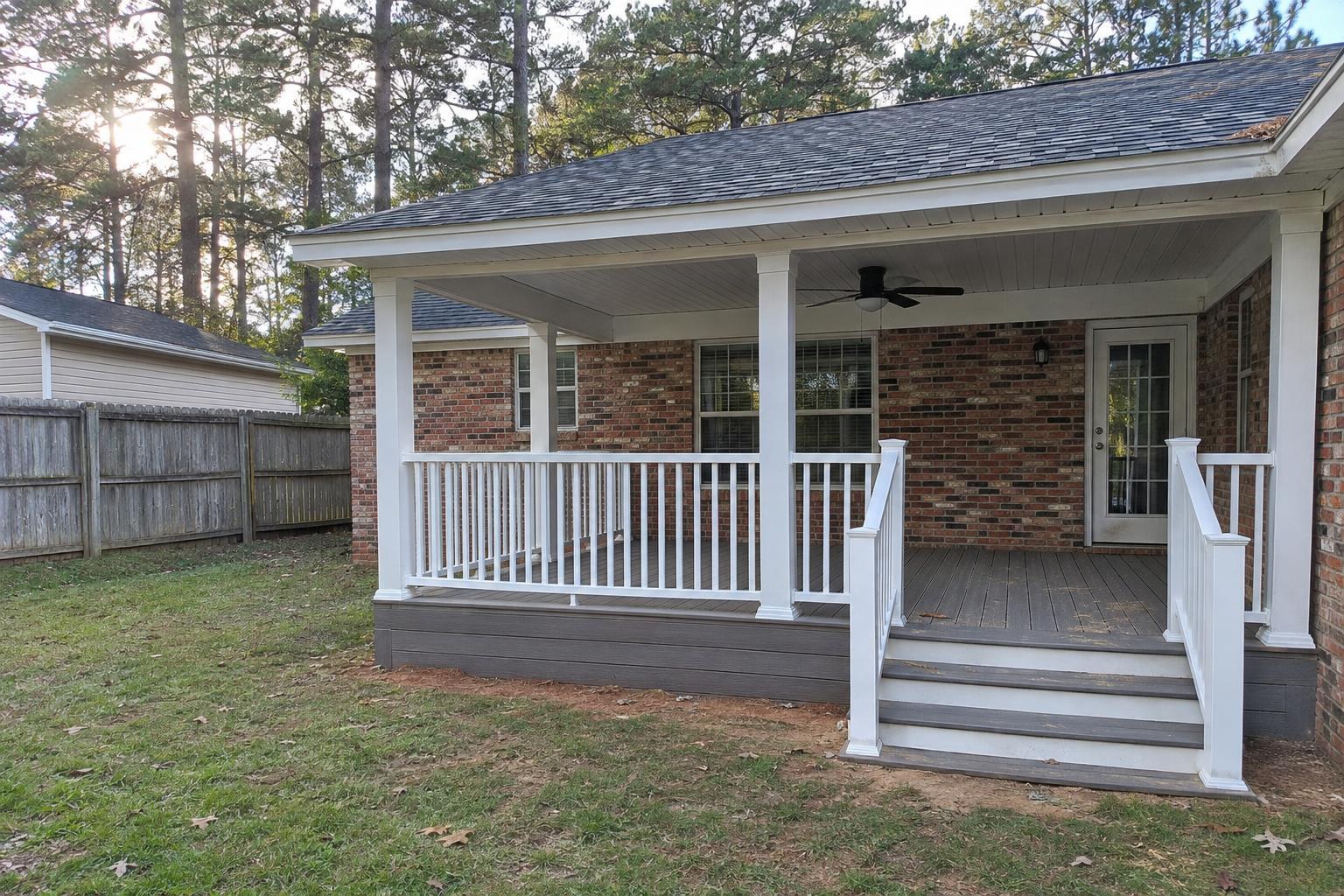
Fairhope has more deck builders advertising than it did five years ago, and most of them showed up with the building boom. Some know what the sandy soil near the bay does to a footing. Some don't. Picking the wrong one doesn't usually show up the first year. It shows up in year three, when a post starts to lean or a ledger board pulls away from the house after a hard rain.
What the ground and the weather here actually do to a deck
Baldwin County doesn't have much of a frost line, so footings here aren't fighting freeze heave the way they would up north. What they're fighting is water. Close to the bay and in low spots around Fairhope, the water table sits high, and sandy soil that looks stable in July can shift under a footing that was poured too shallow or too narrow. A builder who knows the area digs to bearing capacity, not just to a depth that satisfies a quick glance at code. On a lot with heavier clay content further inland, the soil swells and contracts with rain and drought, and that movement works on undersized or poorly spaced footings over a few seasons.
Humidity is the other factor. Fairhope sits through long stretches of 85 percent humidity plus in summer, and that slows cure time on concrete, stain, and sealant alike. It also feeds subterranean termites, which are a real problem on the Eastern Shore. Any wood that touches the house, especially the ledger board, needs proper flashing so water doesn't sit behind it and give termites and rot a place to start. I've seen ledger boards bolted straight to a rim joist with no flashing at all, looking fine for two years and then failing where nobody can see it until the deck starts to pull away from the house.
Older streets versus new subdivisions
A lot of the housing closer to downtown Fairhope and the bluff was built decades ago on pier and beam foundations, often with a crawl space that's already damp and already has some termite history whether the owner knows it or not. Tying a new deck into a house like that means checking the existing framing before you build off it, not just measuring for lumber. Newer subdivisions further out tend to sit on slab foundations with cleaner soil conditions, but they're also more likely to have an HOA with its own rules on deck height, railing style, or setback from the property line. Either way, the builder should be the one raising this before you sign anything, not after the posts are already set.
Permits aren't optional, and skipping them costs you later
Most decks in Fairhope and the surrounding unincorporated parts of Baldwin County need a building permit, particularly if the deck attaches to the house or sits more than a couple of feet off grade. That means a footing inspection before the concrete goes in, and usually a framing inspection before the decking boards go down. If you're near a property line, a setback check matters too. A builder who tells you the permit can be skipped to save money is telling you one of two things: either they don't carry the insurance an inspector would want to see, or they'd rather nobody check their footing depth and spacing. Either way, that unpermitted deck becomes your problem at resale, not theirs.
What a builder worth hiring can explain without hesitating
Ask how the ledger board attaches to the house, and listen for an answer that mentions through-bolts or structural lag screws and flashing, not just nails. Ask how many footings the deck needs and why. That number comes from the span, the joist size, and the load, not a guess. Ask what spacing the joists will be set at. Standard framing runs 16 inches on center for a lot of decking, but some composite brands call for 12-inch spacing to keep the boards from sagging over time, and a builder who's installed that brand before will know it without checking the box. If someone can't answer these questions in plain terms, they haven't done enough of this work to be trusted with yours.
Red flags when you're comparing bids
- A bid that comes in far below the others with no explanation. That gap is usually sitting in the footings, the fasteners, or the permit line.
- No mention of a permit at all, as if it isn't part of the job.
- A deposit over 30 to 50 percent of the total before any material shows up on site.
- Vague language about pressure treated lumber with no grade named, or composite with no manufacturer named.
- No certificate of insurance when you ask for one. Ask for it. A legitimate builder has it ready.
Material choices and what they mean down the road
Pressure treated pine is the cheapest decking to install and the one that needs the most attention afterward. In this climate, expect to stain or seal it every two to three years, sooner if it's full sun all day, or the boards will cup and check. Composite costs more up front, often two to three times the material cost of pine, but it doesn't need staining. It still needs proper ventilation underneath and board spacing that accounts for moisture, and dark composite colors get noticeably hot underfoot on an August afternoon here, which matters if there are kids running around barefoot. Hardwoods like ipe show up occasionally for homeowners who want something that'll outlast everyone's patience, but they're harder to source locally and cost accordingly.
Whatever material you choose, hurricane season runs June through November on the Gulf Coast, and the hardware holding your deck together matters as much as the boards on top. Joist hangers rated for the load, structural screws instead of common nails, and post bases anchored properly to the footing make the difference between a deck that rides out a tropical storm and one that doesn't.
A good deck builder in Fairhope will walk your lot, talk about drainage and soil before material, and pull the permit without being asked twice. That's most of what Highland Deck Solutions does on a given week, footings, framing, and the parts of the job nobody sees once the boards go down.